Xclusive Academy · Scottsdale
Learn to wrap on real cars.
In a real shop.
A hands-on course for people starting from zero. Small groups, real vehicles, real film, taught by the installers who do this every day. Not a video library you watch alone at home.
Who this is for
You do not need experience. You need hands and patience.
Most people who are good at this did not come from cars. They came from trades where being careful mattered.
01
Starting from zero
You have never touched film. You want a trade that pays on skill rather than a degree, and you are willing to be bad at it for a while before you are good.
02
Already in the game
You detail, tint, or do body work and want to add wrap and PPF to what you can charge for. You know cars. You need the film-specific technique.
03
Sending a new hire
You run a shop and your senior tech is babysitting instead of installing. Send the new person here and get them back able to carry panels on their own.
What you actually do
Hands on film from the first day.
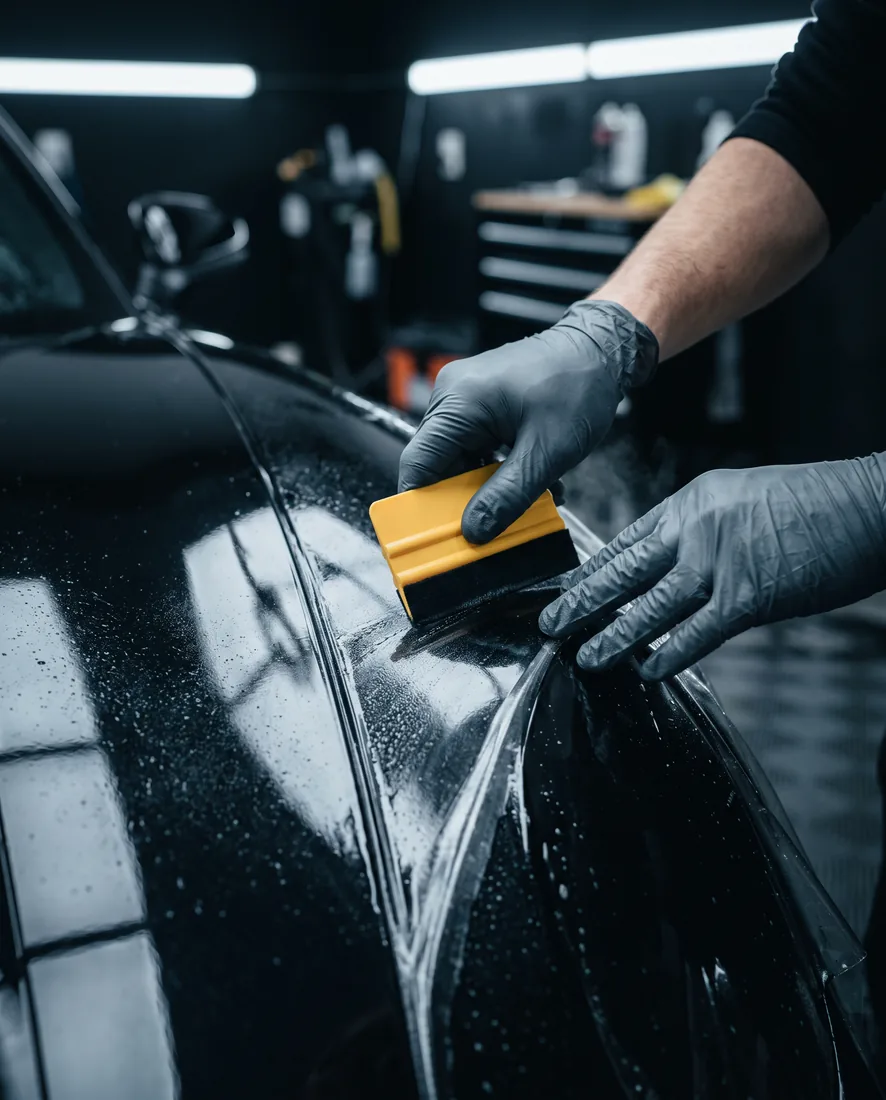
You will spend far more time with a squeegee than with a slideshow. Every module ends with you doing the thing, on a real panel, and having it critiqued.
Prep, decon and the boring part
Why most failures happen before any film comes off the roll. Washing, claying, solvent wipe, tack cloth, and reading paint condition before you commit to a job.
Tools, blades and heat
Squeegees, knifeless tape, heat guns, IR. What each tool is for, how much heat is too much, and how to cut on a car without cutting the car.
Flat and simple panels
Doors, roofs, hoods. Laying film without trapping air, managing tension, and finishing an edge so it stays finished.
Compound curves
Bumpers, mirrors, fenders. The part that separates people who can wrap from people who can wrap anything. Relief cuts, inlays, and when to use two pieces instead of fighting one.
Paint protection film
Where PPF differs from vinyl: thickness, memory, slip solution, tack, and wrapped edges. Working wet instead of dry.
Working like a shop
Quoting your time honestly, handling a customer who is watching, what to do when you damage something, and how to tell a client their paint is not good enough to wrap.
How it runs
Small enough that you get corrected.
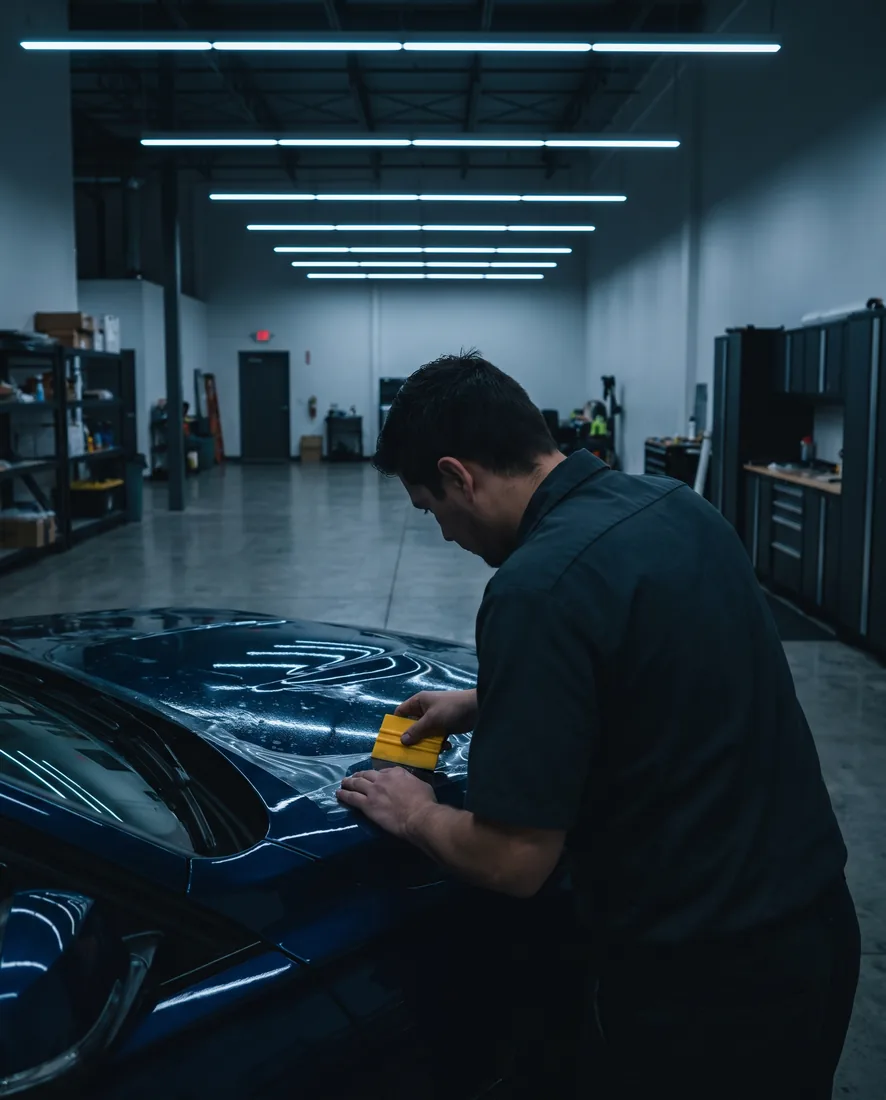
A class where one instructor faces twenty people is a lecture. You learn this by having someone stand next to you and tell you what your hands are doing wrong.
- FormatIn person, Monday to Thursday
- Length32 hours over four days
- Class sizeSix students
- Where7856 E Acoma Dr, Scottsdale, AZ 85260
- VehiclesShop vehicles and practice panels
- ToolsProvided for the course
- Cost$950
- Next datesAsk for the next available dates
After the course
The good ones get noticed. That is the honest version.
We run a working shop, and we need capable installers. People who stand out in a course are the first people we think of when we need another set of hands. That is an advantage, not a promise.
What we can say
- You train in the shop, so we see how you work
- Standouts are considered first for openings
- We will tell you honestly whether you are ready
- We will point you at other shops we rate
What we will not say
- That a job is guaranteed, because it is not
- That you will earn a specific amount
- That the course makes you certified
- That everyone who pays comes out employable
What decides it
- Whether you show up on time, every day
- Whether you take a correction without sulking
- Whether your edges are clean when nobody is watching
- Whether there is an opening when you finish
Common questions
Straight answers.
Do I need any experience?
No. The course assumes you have never handled film. If you already install, tell us on the application and we will say whether it is worth your time or whether you would be better off with a shorter advanced session.
Will I get a job at the end?
Not automatically, and anyone who tells you otherwise is selling something. We hire from people we have watched work, so training here puts you in front of us. Whether we have an opening when you finish is a separate question.
Is this a certification?
No. There is no universal wrap certification. Film manufacturers run their own certification programs, and those are separate from this. What you leave with is skill and, if you earn it, a reference from a working shop.
What do I need to bring?
Closed shoes, clothes you do not mind ruining, and a willingness to stand up all day. Whether tools are provided or purchased is still to be decided.
Can I practise on my own car?
On the later modules, yes, by arrangement. Ask when you apply.
How long before I am actually any good?
A course gets you competent on simple panels and teaches you what good looks like. Speed and complex curves come from repetition afterwards. Anyone promising you expert in a week is lying.
Apply
Tell us about yourself.
There is no fee to apply. We read these ourselves and reply either way.
What you leave with
Competent on real panels, and honest about the rest.
- The ability to prep a vehicle properly and read whether paint can take film
- Clean work on flat panels and a real method for compound curves
- An understanding of where PPF differs from vinyl
- An honest assessment of where you are and what to practise next
Bring closed shoes and clothes you do not mind ruining. You will be on your feet all day.
Next step
Come and see the shop first.
If you are not sure it is for you, come by and watch an install. It costs nothing and it will tell you more than any course description.