Paint Protection Film
Rock chips stop at the film.
Not at your paint.
The 101 and the 51 will sandblast a front bumper in a season. Paint protection film is a clear urethane layer that takes that damage instead of the finish underneath, and comes off later without taking the paint with it.
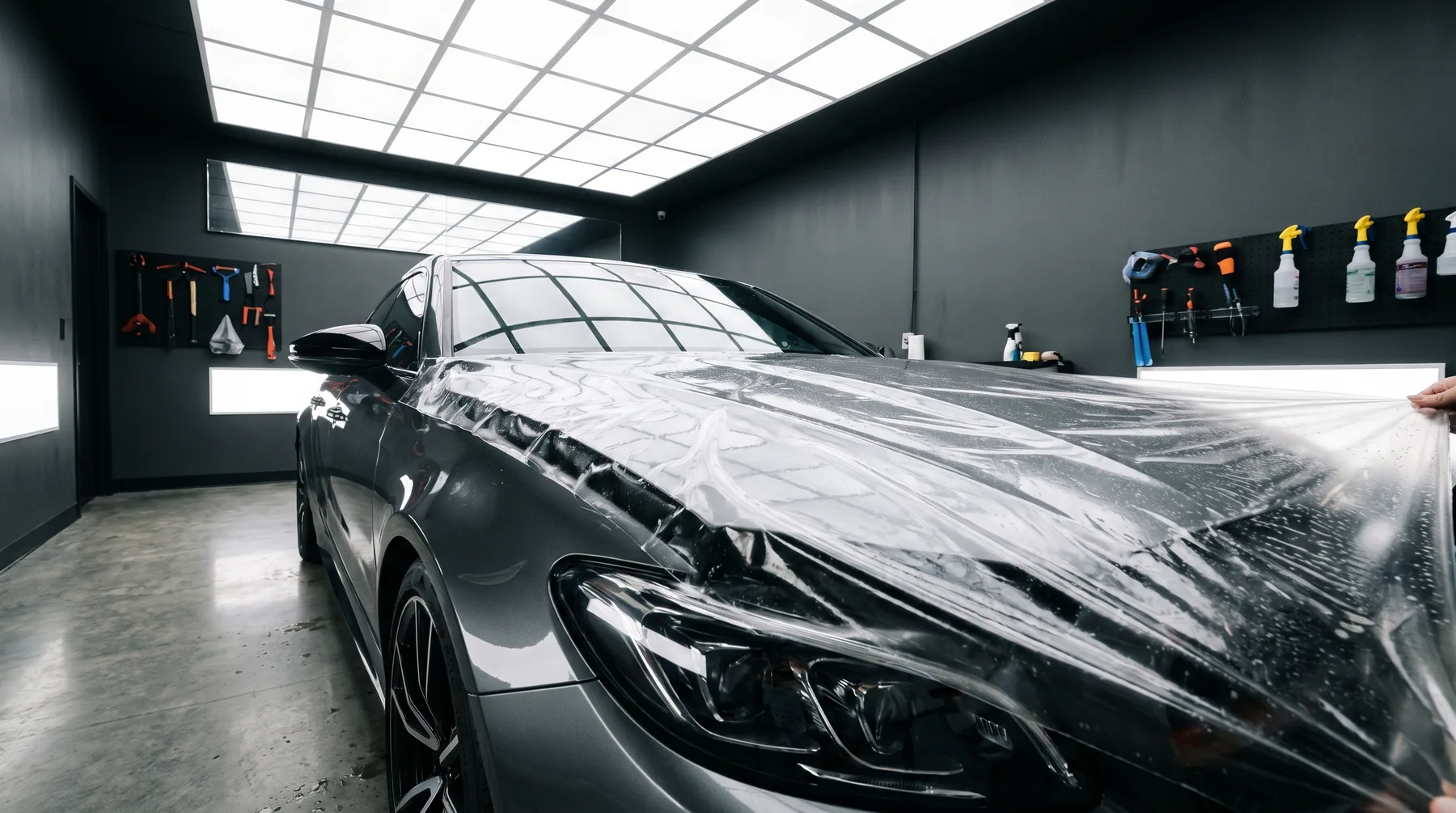
Coverage options
Cover what gets hit, or cover everything.
Most people start with the front. How far back you go is a budget decision, not a quality one, and we will tell you honestly where the money stops mattering on your specific vehicle.
01
Partial Front
Front bumper, partial hood, partial fenders, and mirrors. The cheapest way to cover the panels that take almost all of the damage.
- Front bumper
- Leading edge of hood and fenders
- Mirror caps
02
Full Front
Full hood, full fenders, full bumper, and mirrors. No line across the hood, which is the thing most people notice on a partial.
- Full hood and fenders
- Front bumper and mirrors
- Headlights, if you want them covered
03
Full Body
Every painted panel. For new deliveries, low-mileage exotics, and anything you plan to keep or resell in factory condition.
- All painted exterior panels
- Door cups, sills, and load edges
- Disassembly where the panel calls for it
High-wear add-ons people usually ask about: rocker panels, rear wheel arches, door edges, door cups, the rear bumper load edge, and the A-pillar and roof leading edge on convertibles.
Color PPF
Change the color and protect it in one layer.
Color paint protection film does both jobs at once: it is a real urethane protection film that happens to be pigmented. You get a full color change with the impact protection of PPF, instead of a vinyl wrap that only handles the cosmetics.
It costs more than vinyl and the color range is narrower. If protection matters as much as the look, it is usually worth it. If you want a specific finish that only exists in vinyl, we will tell you that too.
What good PPF looks like
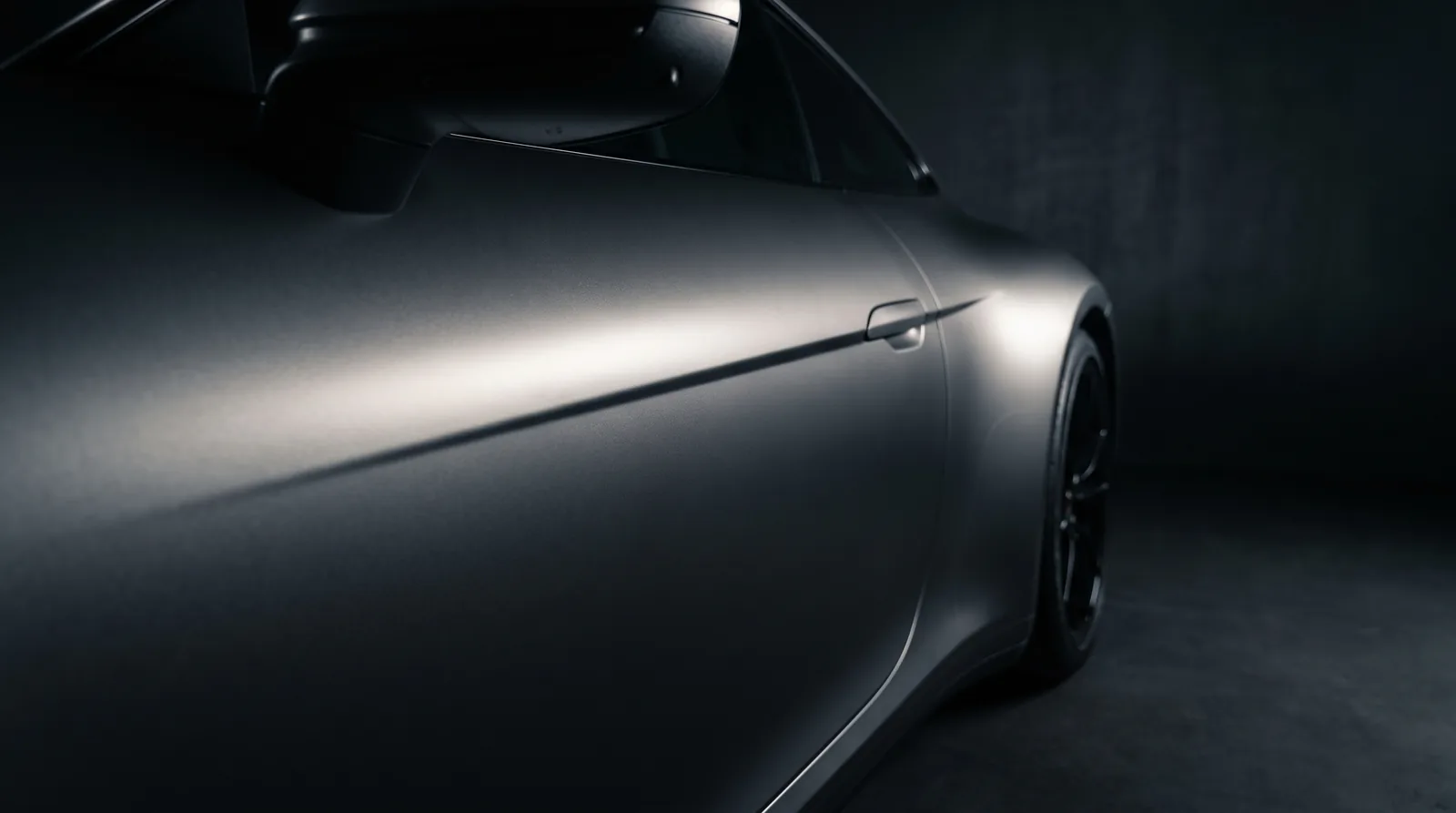
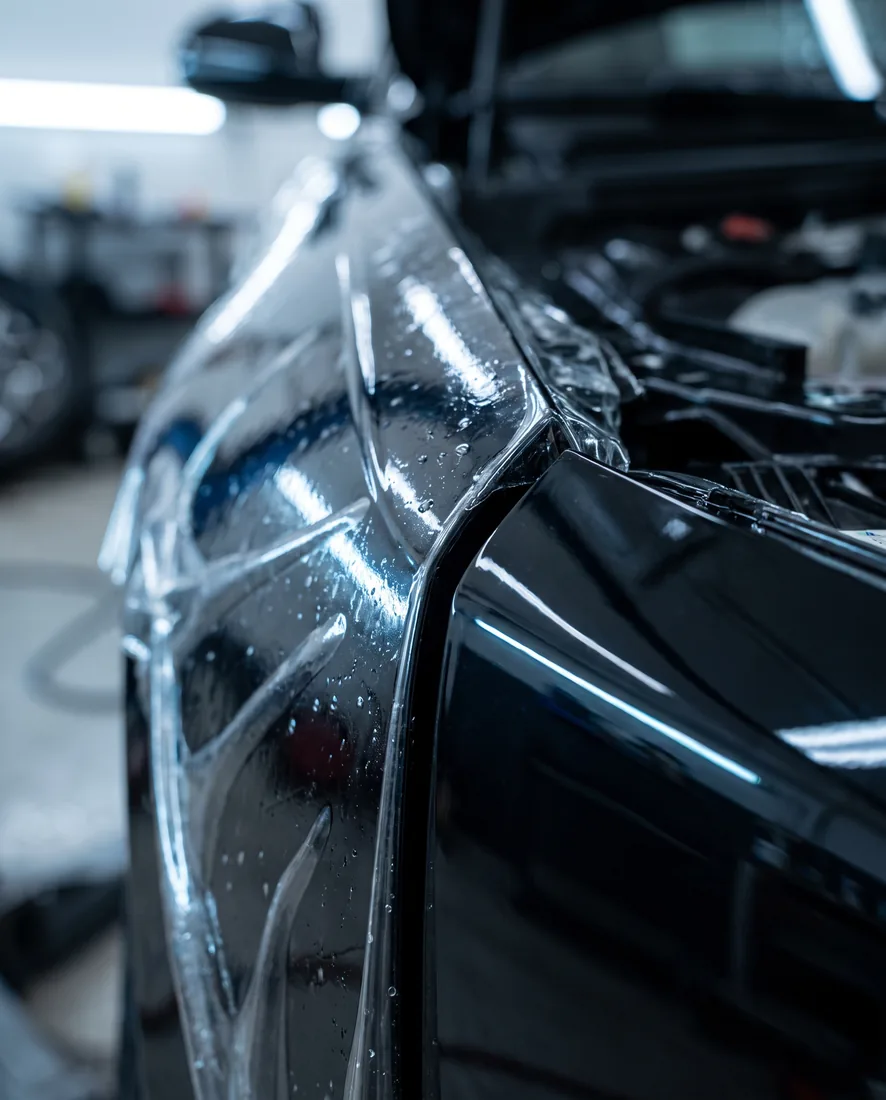
Judge it at the edges and in the sun.
- Edges wrapped and tucked behind the panel wherever the panel allows it, not cut flat on the surface
- No lifting at corners, mirrors, or bumper returns after the first hot week
- Seams placed on body lines, or no seams at all where a single piece will do
- No trapped dirt, hair, or fingerprints under the film
- Panels reassembled properly, with nothing rattling or misaligned
Most quality films today have a self-healing top layer, so light swirls close up with heat. Film brands differ. We will tell you exactly which film is going on your car and what its manufacturer warranty actually covers.
PPF questions
Before you book.
How long does paint protection film last?
It depends on the film, the coverage, and how the vehicle lives. Arizona sun and heat are harder on film than a mild climate, and a daily driver on the freeway wears differently than a weekend car. Manufacturer warranties give you a number; we will show you the actual warranty for the film we are installing rather than quoting a general figure.
Can it be removed later?
On healthy factory paint, yes. Film is designed to come off with controlled heat. Paint that has been resprayed, has failing clear coat, or was repaired with poor adhesion is a real risk, and we will inspect for that and tell you before we start.
PPF or ceramic coating?
They solve different problems. Coating makes the surface easier to clean and adds gloss and chemical resistance. It does not stop a rock. Film stops impact. Plenty of people do film on the front and coating over the top of everything.
Will I see the film?
Up close, on some edges, in the right light, yes. That is true of every install. The goal is that nobody notices it from a normal viewing distance and that the edges are placed where they make sense.
How soon can I wash it?
Give the adhesive time to fully set before the first wash. We give you the exact window in writing at pickup, along with what to avoid at the edges.
Next step
Send photos. Get a real number.
Year, make, model, and a few shots of the front end are enough for us to scope it.